Derby Rubber Duck Races Make a Splash for Fundraising & Events
Scott Kalapos on Aug 3, 2026
Attracting attention to a fundraiser can make or break hitting your goals. Most fundraisers incur expenses that eat up half of the money the event raises. Rubber duck race events are an exception, as thousands of bright yellow rubber ducks bob down the river.
Since they began in 1988, duck derbies have raised over $280 million. That’s more than $7.5 million a year. Savvy nonprofit organization leaders have discovered that a few thousand floating yellow rubber ducks in a race to the finish line puts them on the fast track to meeting their fundraising goals.
The Chicago Ducky Derby raised close to $400,000 (opens in a new window) for the Special Olympics Illinois in 2024, and that was just in duck adoptions! Bend, Oregon's Rotary Duck Race has generated over $2.5 million since 1989 (opens in a new window) for Central Oregon charities. Even mid-sized events like the Great Estes Park Duck Race raised over $204,000 in 2025 (opens in a new window) for 74 local organizations.
Rubber duck races have the magic of being an appealing and cost-effective fundraiser. Entry costs are low enough that families can adopt a duck without hesitation. Everyone is engaged, looking for their duck from the sidelines and cheering them on. You get social media moments that turn every participant into a volunteer marketer. Plus, clean-up is as simple as casting a net into the waterway.
This year, skip the mediocre events that require massive effort and host a duck race to have fans, sponsors, and volunteers flock to your event. Your quirky community event will be a serious fundraising success once you get your ducks in a row!
What is a Duck Race?
Rubber duck races are fun fundraising events for non profit organizations and communities. Attendees adopt a duck that races in a waterway toward the finish line. Prizes are awarded to the winning ducks.
Race day includes more than the duck drop itself. It’s an opportunity to create a festival-like atmosphere with live music, food trucks, vendor booths, and family activities. Participants arrive early to claim good viewing spots and enjoy the entertainment as the anticipation builds for the main event.
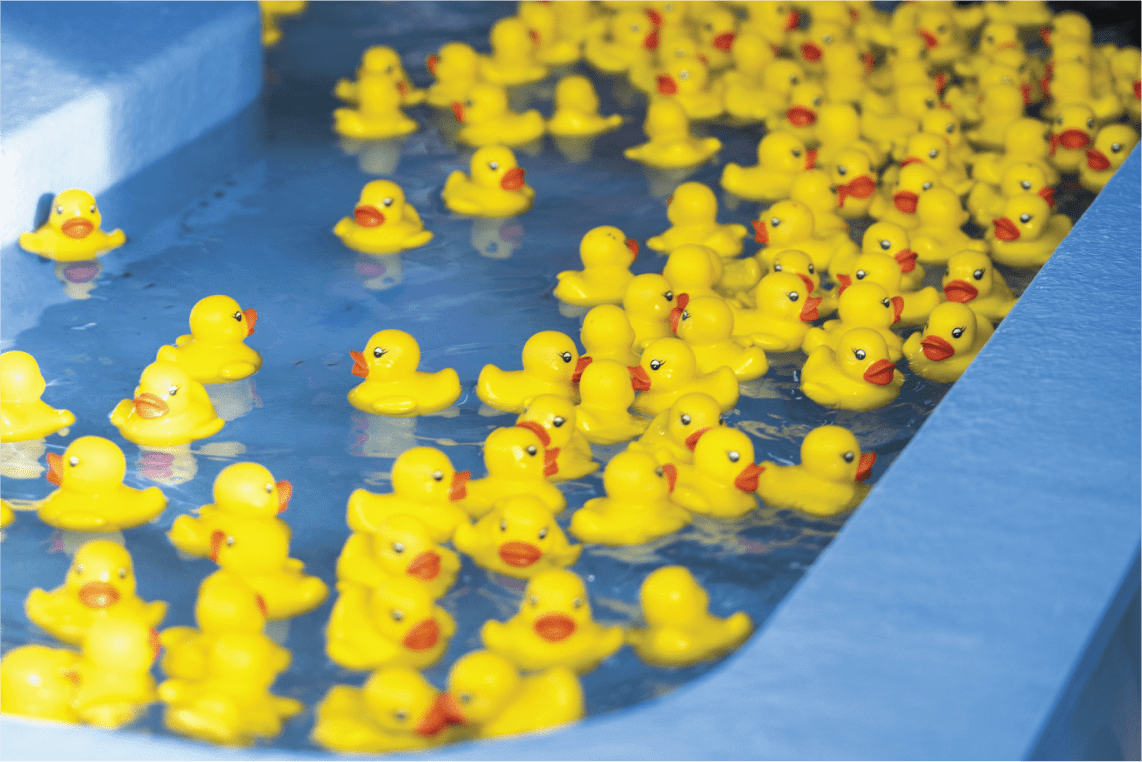
When it’s time for the derby to start, hundreds or thousands of the adopted yellow rubber ducks are released simultaneously into the water. They float downstream toward the finish line. The first duck to cross wins the grand prize or a cash prize for its adoptive owner.
Why Rubber Duck Races Work So Well
Rubber duck derbies give people a reason to participate. They're simple, affordable, and fun for every age group. Galas and golf outings typically have a barrier to entry. A family can adopt a duck at a duck race for a small donation. They cheer it down the course and spend the rest of the day enjoying the event. Sponsors gain visibility, volunteers stay engaged, and spectators become part of the experience.
They are successful because they combine several fundraising strengths into one event:
- Low-cost participation encourages more donations.
- Families can participate together.
- Bright yellow ducks create eye-catching photos and social media content.
- Businesses have multiple sponsorship opportunities.
- The event grows each year as returning participants spread the word.
When fundraising feels like a reason to party instead of begging for donations, people are much more likely to participate.
Fast Track Fundraising with a Duck Derby
Hosting a duck race is similar to running a raffle, but instead of drawing a ticket, the river and one lucky duck decide the winner. Duck derbies are far more engaging than a simple raffle, though. Unlike hosting a skills-based event, any unfair advantage is gone as there is no special knowledge or ability needed to have fun. It’s a family-friendly community event great for all ages.
The best part? Your nonprofit organization raises funds from every duck adoption as you draw crowds and media attention. Participants adopt their ducks by making a donation for a numbered rubber duck. Duck races will sell individual ducks for a modest fee, usually $5-20. Some events have incentives to buy more ducks with discounts on buying 5 to 10 at a time.
It works so well because it combines the appeal of winning the grand prize of a raffle with the entertainment value of a live sporting event. It’s also a very scalable event, since you can always increase the number of ducks. Opt for 500 ducks, 5,000 ducks, or try to beat London’s record of 250,000 rubber duck racers. There is the opportunity for multiple revenue streams, including duck adoptions, sponsorship opportunities, and concession sales.
While the concept is simple, the result is a fun, joyful activity that builds community. Duck races offer plenty of media and photo potential, so promoting the event is a breeze. The bright yellow rubber ducks and fanfare peak curiosity and make people want to share. People of all ages come out to cheer on their ducks.

A Roadmap for Planning a Duck Race
It’s time to ditch the dinner events and ticket sales, organizing rubber duck races for your nonprofit organization is easier and delivers fundraising results. Seasoned organizers love how easily the parts of a duck race build upon each other. Even if it is your inaugural duck race, you’ll find it to be a very forgiving event. You don’t have to worry about complex logistics or timing meal service and entertainment. Even when timelines need to be adjusted during the event or there are minor hiccups, a duck derby doesn’t quack under pressure.
Step 1 - Set your goals and budget
Before getting into the planning process of any fundraising event, it is important to set goals. Make sure the team is aligned and you have your budget set. You’ll want to keep track of every dollar spent in order to know your cost per dollar raised (opens in a new window) after the event.
Start with your fundraising goal and work backward. A $25,000 target might require 2,500 duck adoptions at $10 each, plus additional sponsorship revenue. Factor in costs for rubber ducks, awards ranging from gift certificates to cash prize payouts, permits, insurance, and marketing when setting your budgets.
Step 2 - Permits and paperwork
Once the goals are set, start scouting for a venue. Rivers, creeks, swimming pools, or even manmade water channels can work for your duck drop. For the safety and enjoyment of all your guests, make sure your venue is adequately accessible and has ample space for spectators to watch the action unfold to the finish line. For public waterways, you’ll likely need to secure permits. Without the waterway, there is no event. We highly recommend applying for your permits as early as possible since waterway usage often requires municipal approval.
Be sure to consult with a legal team about local gambling laws, as some jurisdictions classify duck races as raffle events requiring special permits. This is also the time to purchase event insurance and establish clear rules for determining the winning duck and prize distribution. Many successful events use a random number system to ensure fairness when multiple ducks reach the finish line simultaneously.
Step 3 - Sourcing and logistics
When you’re planning your duck race, you obviously need to figure out the main component… the ducks! There are organizations you can partner with that have ducks to rent. You'll need ducks that are consistently weighted for fair racing, numbered clearly and durably, made from safe non-toxic materials, and bright enough for easy spotting and photography.
Should You Buy Bulk Custom Rubber Ducks for Your Race?
To pull off a duck race, you need hundreds or even tens of thousands of durable rubber ducks. 4AllPromos has a collection of over 300 rubber ducks to choose from. We also have weights for racing. When you choose to buy your own rubber ducks instead of renting them, you have them year over year, and your ROI only continues to grow. Plus, each of your ducks will show off your logo as it swims down to the finish.
Remember, the total number of ducks will determine your maximum revenue potential from duck adoptions. When you're running your first 1,000-duck race or planning your 10th, we make ordering any of your custom logo products easy. Reach out to our team for help estimating your needs and timing your delivery to have your ducks, shirts, promo giveaways, and more ready for your race.

Step 4 - Secure sponsorships
Corporate sponsors offset costs. Let businesses purchase a “flock”, or a large block of duck adoptions, to add their logo to the ducks. Encourage companies to buy flocks for employee engagement, giving each employee a number and a chance to win the race.
Creative Sponsorship Ideas
Looking for ways to increase sponsorship revenue? Consider offering branded sponsorship opportunities throughout the event.
Sponsors can support:
- The Duck Drop
- The Finish Line
- Volunteer T-shirts
- Entertainment Stage
- Kids Activity Zone
- Food Court
- Prize Tent
- Vendor Booths
- Live Music
- Grand Prize
- VIP Viewing Area
Step 5 - Prize Structure
Successful events typically have early bird specials and tiered prizes. The grand prize winner is the largest prize, but having multiple smaller awards increases odds of winning and participating. Make connections in your community by reaching out to local businesses for donations. A gift certificate sends winners right into their stores and gives them promotional recognition at the event.
Step 6 - Marketing and sales
Use a multi-channel approach to marketing your duck race. On the digital front, social media is a great way to spread the word, both organically and via paid advertisements. Run a contest to be the duck dropper or post about being a volunteer to help collect the ducks after the race. Leverage your email list with flows and segments to encourage participation, sponsorship, and attendance. Send emails and sms messages to create a sense of urgency with early-bird pricing and limited-time offers.
Include brick and mortar marketing in the area your ducks will be racing. Have local credit unions, super markets, and shops offer ducks to adopt at their counters. Use discounts when ducks are adopted in larger quantities to encourage larger spend.
Step 7 - Gather volunteers
As you are marketing your duck derby, be sure to get the word out about volunteer opportunities. List specific roles for duck adoption sales, race monitoring, crowd control, and prize distribution. Have a plan in place to brief volunteers on safety procedures and contingency plans for the day of the event. We also recommend having a way to make your volunteers stand out at the event, like with a special volunteer t-shirt design that both builds team spirit and makes them easy to identify.
Step 8 - Race Day
Make your rubber duck race a full community event featuring live music, food trucks, and family activities. These additions boost overall attendance and fundraising beyond basic duck adoptions. They also create a festival atmosphere that passersby will gravitate towards.
Assign volunteers or staff to be photographers and have your social media managers to capture the spectacle of thousands of yellow rubber ducks racing downstream. Live-stream the duck drop and race for remote participants, and create content for next year's race marketing.
Step 9 - Debrief
After your ducks have all crossed the finish line and have been netted and secured, it’s good practice to debrief your staff and volunteers. This helps you know what went well and where things can improve. You can look at last year’s event and be better prepared for your next duck race.
Quick Recap: Rubber Duck Race FAQs
- How many rubber ducks do I need for a fundraiser?
- The number depends on your fundraising goals. Smaller community events may race a few hundred ducks, while established duck derbies often release several thousand.
- How much should a duck adoption cost?
- Most organizations charge between $5 and $20 per duck adoption, with discounts for purchasing multiple ducks. Your pricing should align with your fundraising goals and audience.
- Can you host a rubber duck race without a river?
- Yes. Many organizations use creeks, canals, lazy rivers, pools, splash pads, or temporary race channels. The key is creating a controlled course that's safe for participants and easy to retrieve ducks afterward.
- Do I need permits for a duck race?
- If you're using a public waterway, you'll likely need permits from your local municipality or parks department. Be sure to research local regulations well before your event date.
- Should I rent or buy rubber ducks?
- Renting is a great option for one-time events, while purchasing ducks often makes more sense for annual fundraisers. Owning your ducks allows you to reuse them year after year and customize them with your organization's branding.
- What prizes work best for a duck derby?
-
Popular prizes include:
- Cash awards
- Gift cards to small businesses
- Local experience packages
- Sporting event tickets
- Restaurant gift certificates
- Electronics
- Sponsor-donated merchandise or services
Offering several prize levels helps encourage more duck adoptions.
- What happens to the ducks after the race?
- Ducks are typically collected immediately after the race using nets or designated collection areas so they can be reused and to ensure they don't remain in the waterway. Responsible retrieval is an important part of planning a successful duck derby.
 Get Your Ducks in a Row for Your Duck Derby
From the first duck drop to six-figure fundraising totals, duck races have proven to be one of the most effective, scalable, and fun community events around. The low entry costs, broad appeal, and return on investment of a well-run duck derby bring together sponsors, families, and volunteers in support of a common cause. Plan your first duck derby or build on last year’s success with the right strategy and the right promotional ducks to cross the finish line with your fundraising goals met.
4AllPromos is here to make sure the ducks are in a row with custom-printed rubber ducks, race-day t-shirts, and branded giveaways that make a splash. Tell us the number of ducks you need, and we’ll be sure to deliver them on time to make this year’s race your best yet.
Sources
- Fox 32 Chicago. (2024, August 7). Chicago Ducky Derby 2024 makes big splash for Special Olympics Illinois. FOX 32 Chicago. Retrieved from https://www.fox32chicago.com/news/watch-chicago-ducky-derby-2024-special-olympics (opens in a new window)
- The Duck Race. (n.d.). Home. Retrieved [access date], from https://www.theduckrace.com/ (opens in a new window)
- The Great Estes Park Duck Race. (n.d.). Home. Retrieved [access date], from https://www.epduckrace.org/ (opens in a new window)
- RallyUp. (n.d.). Calculating your cost-per-dollar raised: A guide for nonprofits. Retrieved [access date], from https://rallyup.com/blog/fundraising-metrics-cost-per-dollar-raised/ (opens in a new window)