Creating a Corporate Wellness Program That Makes It Past February
Scott Kalapos on Dec 11, 2025
Every January, we all make personal resolutions and offices reignite their corporate wellness programs. We sign up for new yoga classes, hold department step challenges, and put healthier snacks in the break room. By Valentine’s Day, the yoga mats are collecting dust, and the step challenge spreadsheet hasn’t been opened in weeks. Sound familiar?
This year doesn’t need another attempt at a wellness reboot. It needs a better design for habit changes. If you use January energy to build systems instead of hyping up novel classes and one-time events, your wellness program will last all year.
This year, build workplace wellness that lasts all 12 months, not just 12 weeks.
Avoid Employee Wellness Program Drops in February
While 87% of organizations offer wellness programs (opens in a new window), most workplace wellness programs see the same drop-off rates. January enthusiasm turns into February fatigue, and by March, the initiative quietly disappears. It’s easy to assume the problem is motivation or buy-in, but the initial push in January proves that the desire for change isn’t the problem. Employees do want to be healthier. The problem is the sustainability of the office wellness program design.
The good news is that this can be addressed. Too many programs are built around big intentions instead of repeatable habits. The goal should not be to inspire people for two weeks. The goal should be to create an environment where healthy choices happen with less effort. Implementing systematic, behavior-based corporate wellness and fitness programs results in participation rates above 70% throughout the entire year (opens in a new window).
This year, instead of riding the January wave until it crashes in February or March, use that New Year energy strategically to create office wellbeing programs that build better habits and systems.

Workplace Wellness Initiatives That Stick All Year
The wellness challenge isn’t inspiring people on day one. It’s helping them stay engaged on day ninety or beyond. Strategies that focus on building simple habits, supportive environments, and predictable rhythms that make healthy choices feel natural instead of forced. If you want wellness to stick all year, start with approaches that fit real people and real workdays.
1. Start with Micro-Resolutions To Build Long-Term Habits
Forget the dramatic overhauls and grand transformations. Research from Stanford's Behavior Design Lab (opens in a new window) shows that tiny, consistent changes create lasting behavior modification in much more effective ways.
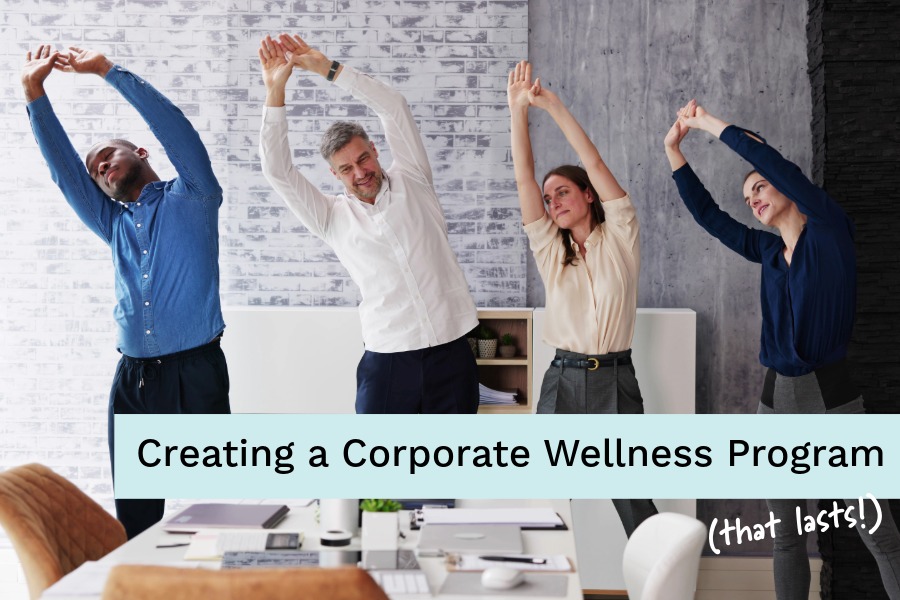
Instead of making company-wide announcements to transform employee health, start with specific, almost laughably small commitments. Trying a single initiative, like a 2-minute stretch break at 3 pm each day. Micro-resolutions are clear, achievable, and hard to resist. The small wins build confidence. Confidence builds consistency, and the consistency builds real change.
After maintaining participation, employees are ready for the stretch break. They may even look forward to it, and by then, they’re ready for more wellness initiatives. By December, you will have organically built a comprehensive wellness program.
Your January Action Plan:
- Choose ONE simple wellness activity
- Make it less than 5 minutes
- Focus solely on consistency for 21 days
- Only add complexity after achieving a 21-day streak
The key is making the behavior so small that not doing it feels silly. When employees succeed at something simple, they build what psychologists call "success momentum," and the confidence from this fuels bigger changes.
2. Create Resolution Teams for Stronger Office Wellness Programs
Top-down wellness initiatives often stall because they feel like another corporate program instead of a shared experience. Wellness committees do important work, but peer accountability is what keeps momentum going.
Create cross-department partnerships or teams, like your accounting team with sales, and IT with customer service. Teams aren’t competing against each other, but rather doing check-ins to hold each other accountable.
Keep check-ins brief, so it never feels like another requirement or meeting. Friendly accountability with a 5-minute weekly chat lets partner departments share their progress or get a pick-me-up when they’ve had a rough time hitting their goals.
Not only will this help participation remain steady, but interdepartmental collaboration can strengthen relationships and collaboration for non-wellness projects, too. The wellness program becomes a team-building initiative.
Making Partnerships Work:
- Match departments that don't typically interact
- Set shared goals, not competitive ones
- Keep check-ins brief and positive
- Rotate partnerships quarterly to keep things fresh
3. Build Habit Bridges to Connect Workplace Wellness from January to December
One reason wellness programs fade is repetition without progression. Doing the same thing all year burns people out. Jumping to something completely new every month does the same. Treating each month's wellness focus as a separate event is a mistake. Instead, create connected themes where each month's habit supports the next.
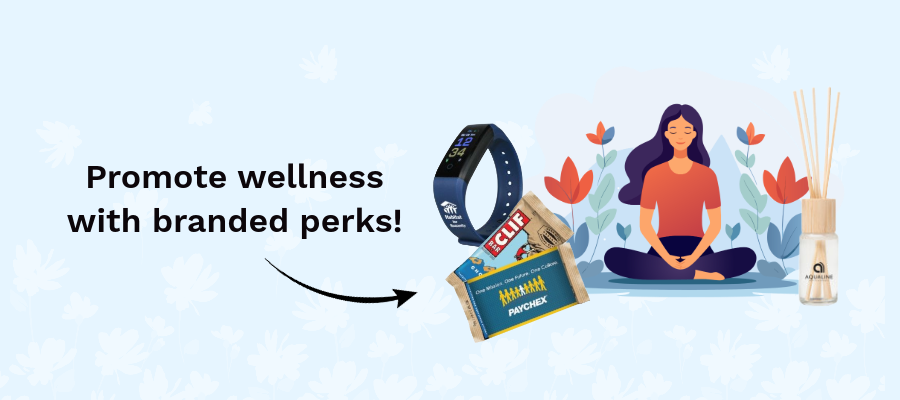
Adding a progression each month makes habit bridges. Each month builds on the last. Use company swag to make the bridges more exciting. For example:
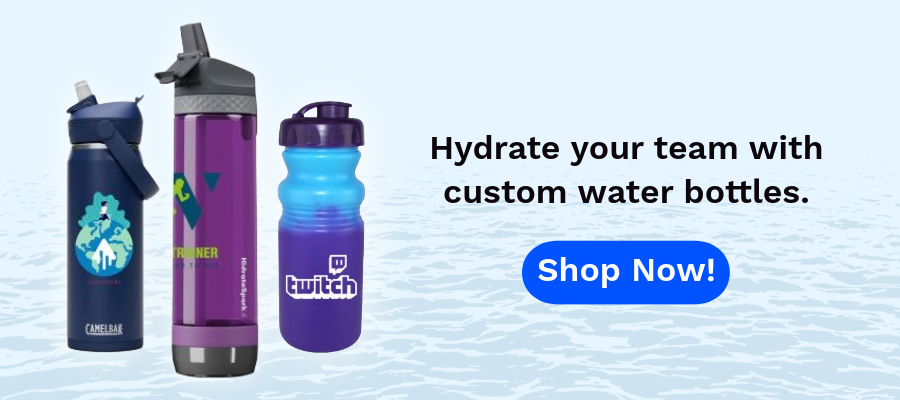
- January: Hand out custom water bottles for a hydration focus. This is a foundational, easy win.
- February: Learn about nutrition awareness and how hydration makes healthy eating easier. Stock the break room with healthy energy bars and nutritious snacks.
- March: Proper nutrition fuels activity. Introduce movement minutes and stretching. For the March milestone, you can go big with custom logo pedometers or a promotional yoga mat.
- April: It’s important to rest after exercise, and focusing on sleep quality will improve all aspects of life. Get branded sleep masks or complete sleep kits for a good night’s rest.
- May: Build the bridge into stress management. Better sleep reduces stress, along with a custom stress ball!
Each habit makes the next one easier to adopt. Behavioral scientists call this "habit stacking" (opens in a new window), and it increases the likelihood of long-term adherence.
4. Make Corporate Wellness Visible Within the Office
Research from the University of Southern California (opens in a new window) found that 43% of daily actions are repeated automatically, without even thinking about it. This means your office environment has the potential to shape behavior.
We’re not talking about a motivational poster. We’re talking about strategic environmental design to make wellness unavoidable. These changes around the office can include adding easily accessible water stations where employees frequently pass, marking the potential calorie burn when you take the stairs vs. the elevator, or posting a wellness progress board and reminders in a high-traffic area.
Just like a sale requires multiple touchpoints, employees should encounter wellness cues at least three times throughout their workday. Not pushy reminders, but subtle environmental nudges that make healthy choices the easy choices. Environmental cues are more effective (opens in a new window) than willpower-based approaches for maintaining long-term behavior change.
5. Plan for the February Fall Off Before It Happens
Most companies wait until participation drops to respond, but by then, it's too late. (opens in a new window)Wellness programs need to anticipate the drop and plan for re-engagement strategies.
Pre-plan company-wide check-ins and refreshers before the wellness program even launches. Start in February with a recommit campaign to keep people going, then at the end of Q1, have a wellness seminar or incentive. When summer hits, you can engage your staff with outdoor meetings and walking breaks for a motivation boost, then by the end of Q3, you’re ready for your final push!
Having wellness seasons creates anticipation. Knowing there will be a check-in in February means people don’t want to fail for that first milestone. Even if employees do fall off, use these events as a celebration of rejoining the program as well as for the success of those who are maintaining progress.
These planned progression points are almost a way of gamifying your corporate wellness program. Like a video game with new levels, each revival introduces fresh challenges while building on established habits.
A Quick Year-Round Blueprint for Your Office Wellness Activities
Before January 1st:
- Survey employees: "What killed your wellness motivation last year?"
- Set short-term goals, not annual transformations
- Order Q1 fitness promo products to launch your wellness program
- Schedule your February Fall Off revival
January
- Launch ONE core initiative with fanfare
- Establish baseline metrics to track like participation, not just enrollment
- Celebrate week-one success publicly
- Build environmental supports
February
- Have the pre-planned February refresh campaign
- Introduce variety within the established framework
- Share 30-day success stories
- Address early obstacles transparently
March-December
- Monthly themes that connect and build
- Quarterly partner rotations
- Bi-annual major refresh events
- By October, you should start planning next year's improvements
Measuring What Matters for Your Corporate Health and Wellness Program
Forget weight loss pounds and gym check-ins. When measuring success for a wellness program, you want to look at VOI (Value on Investment) to know if you’re making a difference for your staff. VOI metrics that predict long-term wellness success are participation consistency, habit streaks, productivity and team effectiveness, morale, and culture markers. You’ll have to use surveys to capture most of this information.
When you’re concerned about the budget of your programs, you can track the ROI of your wellness program. Look at correlations between performance and profitability, absenteeism, and reductions in health risks.
If you need to pitch your wellness program to the board for approval, research from the Global Wellness Institute (opens in a new window) shows that companies with sustained wellness programs see:
- 28% reduction in sick days
- 26% reduction in health costs
- 30% improvement in employee retention
- 15% increase in productivity
But perhaps more importantly, employees report feeling genuinely cared for by their organization. This is something that no January-only initiative can achieve.
Making Next Year Different With a Sustainable Corporate Wellness Strategy
This year, after your holiday parties and corporate gift exchanges, it's time to launch a wellness program designed to succeed. People don’t suddenly become more disciplined. They create habits that make wellness second nature. The new year gives you energy, but a well-thought-out wellness program turns that energy into sustained change. The combination of micro-resolutions, team partnerships, habit bridging, office design, and pre-planned check-ins takes New Year's enthusiasm and creates genuine culture change.
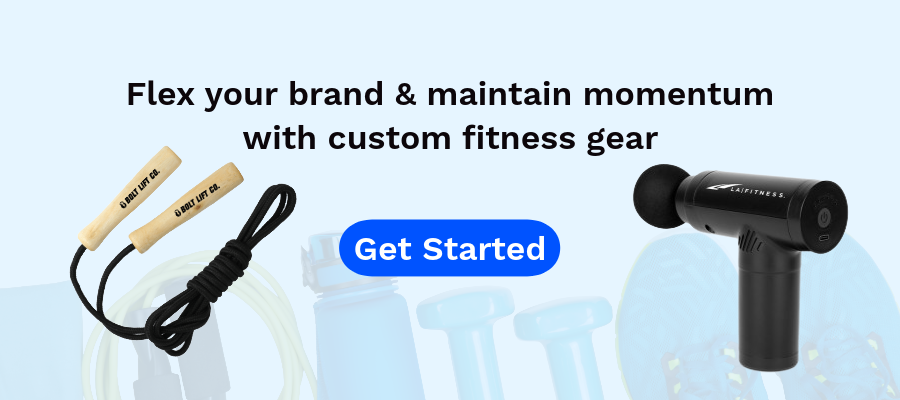
When healthy choices become the default, and when each month builds on the last, wellness stops being a resolution and starts being just how things are done. Kick off your wellness program with custom logo promotional products to support health and fitness goals!
Sources:
- Ron. (2025, September 15). The modern approach to workplace wellness: Prepared, protected, and productive. WorldHealth.net. . https://worldhealth.net/news/the-modern-approach-to-workplace-wellness/ (opens in a new window)
- Aldana, S. (2020, January 2). 5 workplace wellness statistics employers should know. WellSteps. https://www.wellsteps.com/blog/2020/01/02/workplace-wellness-statistics-wellness-stats/ (opens in a new window)
- Abrahams, M. (2023, April 18). Building habits: The key to lasting behavior change. Stanford Graduate School of Business. https://www.gsb.stanford.edu/insights/building-habits-key-lasting-behavior-change (opens in a new window)
- Clear, J. (n.d.). How to build new habits by taking advantage of old ones. James Clear. https://jamesclear.com/habit-stacking (opens in a new window)
- Wood, W. (2019). Good habits, bad habits: The science of making positive changes that stick. Farrar, Straus and Giroux. https://dornsife.usc.edu/wendy-wood/good-habits-bad-habits/ (opens in a new window)
- Rain, F. (n.d.). How environment shapes our actions more than willpower. Medium. https://frankierain.medium.com/how-environment-shapes-our-actions-more-than-willpower-42882c5dddae (opens in a new window)
- Global Wellness Institute. (2024). 2024 Global Wellness Economy Monitor. Global Wellness Institute. https://globalwellnessinstitute.org/industry-research/2024-global-wellness-economy-monitor/ (opens in a new window)